Pronunciation: woh-KOH-soh
Definition: A person who performs social awareness—particularly around Indigenous, racial, or decolonial issues—without the lived experience, historical grounding, or community accountability to back it up. The wokoso mistakes enthusiasm for expertise and often ends up doing more harm than good, typically through lateral attacks on their own people rather than confronting actual systems of oppression.
Etymology: A fusion of woke (in its original sense of being socially and racially conscious—not the right-wing weaponization of the term) and mocoso (Mexican Spanish for “snotty-nosed kid,” denoting naivety, inexperience, or someone who hasn’t yet matured past childhood impulses). The combination captures someone who has adopted the language of consciousness but lacks the wisdom and experiential grounding that comes from years of study, ceremony, community work, and honest self-reflection.
The term emerged partly in response to a growing trend of wack scholarship coming out of academia—work that positions itself as progressive or decolonial while reinforcing anti-Chicano and anti-Indigenous narratives. This should not be confused with journalist Gustavo Arellano’s employment of similar terminology, which operates from a different political orientation altogether—one that often punches at progressive movements without centering a white supremacy analysis. Our usage is specific to Indigenous reclamation spaces and names a pattern of lateral violence, not a dismissal of social consciousness itself.
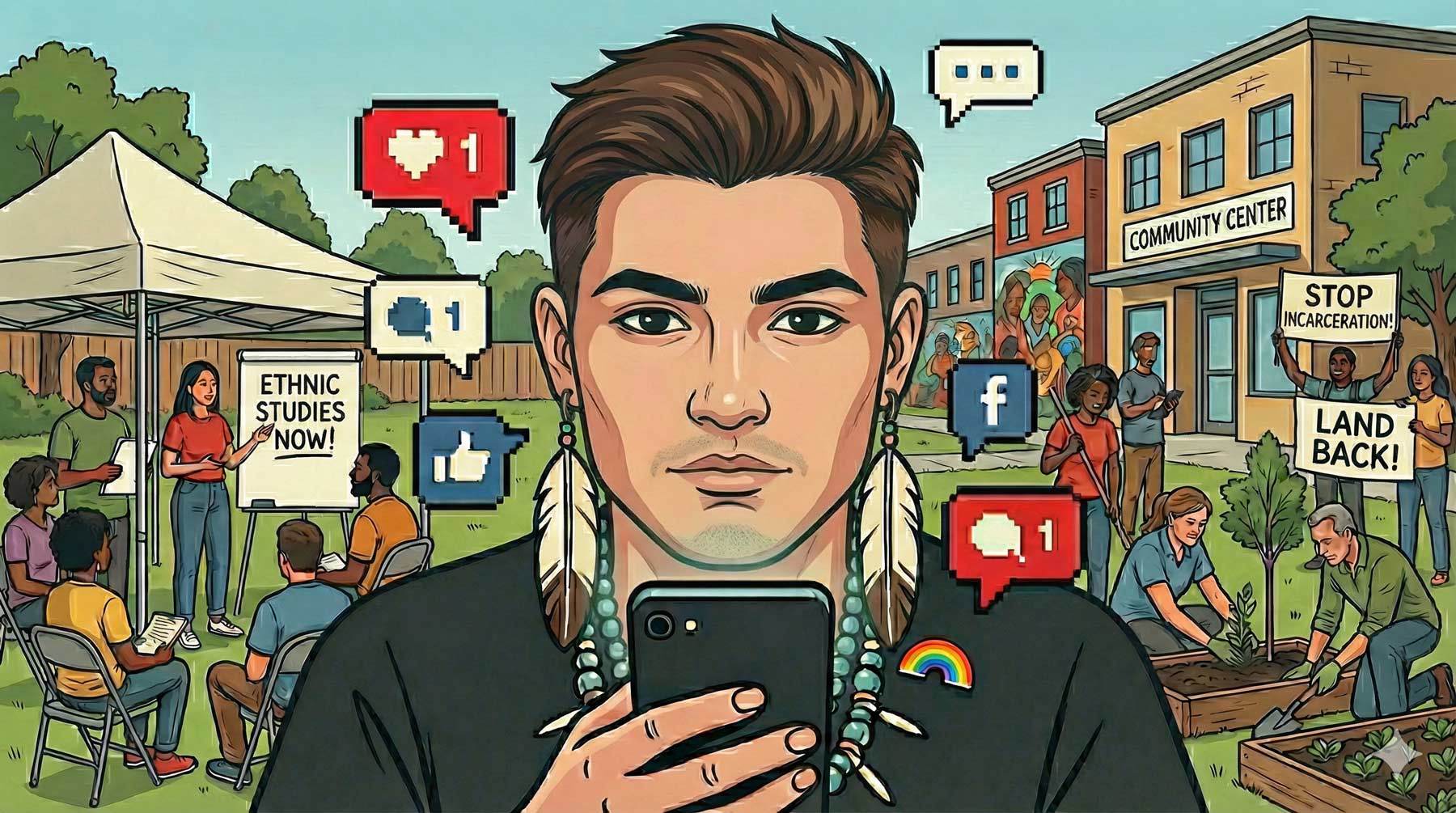
Usage Context: A particular pattern shows up in Indigenous reclamation spaces, social justice circles, and increasingly in academic settings: individuals who acquire surface-level knowledge—often from social media, a few books, or brief workshop experiences—and then weaponize that incomplete understanding against their own community members. Rather than incorporating a white supremacy analysis into their stances (or even demonstrating the capacity to do so), wokosos punch laterally or downward at fellow Indigenous people, Chicanos, or others doing the actual work—leaving the real structures of oppression untouched.
We were all new to this path once. The distinction lies in the spirit behind the action. The wokoso substitutes ego for humility, performance for practice, and social media clout for community accountability. Their motivations tend toward satisfying emotional and individualistic whims rather than serving the collective.
They speak with authority they haven’t earned and often cause harm by spreading misinformation dressed in Indigenous aesthetics. What marks the wokoso is a vindictive, unskilled, and emotionally driven approach, a clever weaponization of identity politics and social justice concepts, combined with an unwillingness to consider advice from elders or OGs in the movement. They would rather double down than humble themselves.
Related Concepts: Optical Indigeneity (superficial/performative Indigenous identity), Dirty Medicine (teachings presented as healing but actually harmful), Lateral Oppression (attacking those beside you instead of those above you in the power structure).
